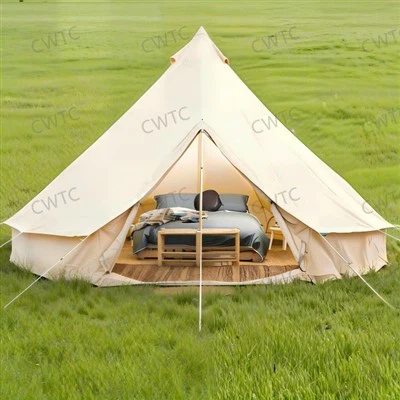

Ventilation efficiency is a crucial aspect when it comes to Safari Tents, especially for those who are in the business of providing comfortable and safe outdoor living spaces. As a Safari Tent supplier, I've had the opportunity to explore and understand the factors that contribute to effective ventilation in these unique structures.
Importance of Ventilation in Safari Tents
Ventilation in Safari Tents serves multiple purposes. Firstly, it helps in maintaining a comfortable indoor environment. During the day, especially in hot climates, the inside of a tent can quickly become stuffy and hot. Adequate ventilation allows for the exchange of hot, stale air with fresh, cooler air from outside. This not only makes the living space more comfortable but also reduces the risk of heat - related illnesses.
Secondly, proper ventilation helps in controlling humidity. In areas with high humidity or during rainy seasons, moisture can accumulate inside the tent. If not ventilated properly, this can lead to the growth of mold and mildew, which can be harmful to health and also damage the tent fabric over time.
Factors Affecting Ventilation Efficiency
Tent Design
The design of a Safari Tent plays a significant role in its ventilation efficiency. Most Safari Tents are designed with large, open - style windows and doors. These openings allow for natural cross - ventilation. When the wind blows, it can enter through one side of the tent and exit through the other, creating a continuous flow of air. For example, our Safari Tent models are designed with strategically placed windows at different heights. The lower windows allow for the intake of fresh air, while the higher windows facilitate the escape of warm, rising air.
The shape of the tent also matters. Tents with a sloping roof design are more likely to promote better ventilation. The warm air rises towards the peak of the roof and can then escape through vents or openings at the top. This natural convection process helps in maintaining a constant air flow within the tent.
Location and Orientation
The location where the Safari Tent is set up and its orientation can greatly impact ventilation. Placing the tent in an open area, away from obstructions such as large trees or buildings, allows for better air circulation. Additionally, orienting the tent in the direction of the prevailing wind can enhance cross - ventilation. For instance, if the wind typically blows from the north, positioning the tent so that its openings face north - south can maximize the amount of fresh air entering the tent.
Ventilation Features
Modern Safari Tents often come with additional ventilation features. Some tents are equipped with adjustable vents, which can be opened or closed depending on the weather conditions. These vents can be located at the top of the tent, along the sides, or even at the base. For example, our Large Luxury Glamping Tent models have adjustable roof vents that can be opened to release hot air during the day and closed at night to retain heat.
Another important feature is the use of mesh screens on windows and doors. Mesh screens allow for air to pass through while keeping insects out. This is especially important in areas with a high mosquito population.
Measuring Ventilation Efficiency
There are several ways to measure the ventilation efficiency of a Safari Tent. One common method is to measure the air exchange rate. This is the number of times the air inside the tent is completely replaced with fresh air in a given period. A higher air exchange rate generally indicates better ventilation.
Another way is to measure the temperature and humidity levels inside the tent. By comparing these levels with the outside environment, we can determine how effectively the tent is ventilating. For example, if the temperature inside the tent is only slightly higher than the outside temperature and the humidity level is within a comfortable range, it suggests that the ventilation is working well.
Comparing Safari Tents with Other Tent Types
When compared to other types of tents, such as Glamping Bell Tents, Safari Tents generally offer better ventilation. Bell tents often have a more circular shape, which can limit cross - ventilation. In contrast, Safari Tents with their rectangular or elongated shapes and multiple openings are better suited for natural air flow.
However, the ventilation efficiency can also depend on the specific design and features of each tent. Some high - end Bell Tents may be equipped with advanced ventilation systems that can rival the performance of Safari Tents.


Improving Ventilation Efficiency
As a Safari Tent supplier, we are constantly looking for ways to improve the ventilation efficiency of our products. One approach is to use advanced materials. For example, we are exploring the use of breathable fabrics that allow for better air permeability. These fabrics can help in reducing the build - up of heat and moisture inside the tent.
We also recommend providing customers with guidelines on how to set up the tent for optimal ventilation. This includes choosing the right location, orienting the tent correctly, and adjusting the vents and windows according to the weather conditions.
Conclusion
In conclusion, ventilation efficiency is a key factor in the design and functionality of Safari Tents. A well - ventilated tent provides a comfortable and healthy living environment for users. As a Safari Tent supplier, we are committed to providing high - quality tents with excellent ventilation features.
If you are interested in purchasing Safari Tents for your glamping business, outdoor event, or personal use, we invite you to contact us for more information and to discuss your specific requirements. We look forward to working with you to provide the best possible solution for your needs.
References
ASHRAE Handbook - Fundamentals. American Society of Heating, Refrigerating and Air - Conditioning Engineers.
Tent Design and Ventilation Studies. Journal of Outdoor Living Structures.